

Gaiwan vs. Western Teapot: Which Brewing Vessel Should You Start With?
The first teapot most people own is a Western one: sturdy, familiar, big enough that you can forget about it for a minute and still pour something drinkable. A gaiwan looks like a bowl that lost its handle and gained a lid. It is also the vessel that changes how many drinkers think about brewing. Neither one wins outright. The useful question is which to learn on, and what each will teach you.
What Each Vessel Actually Does
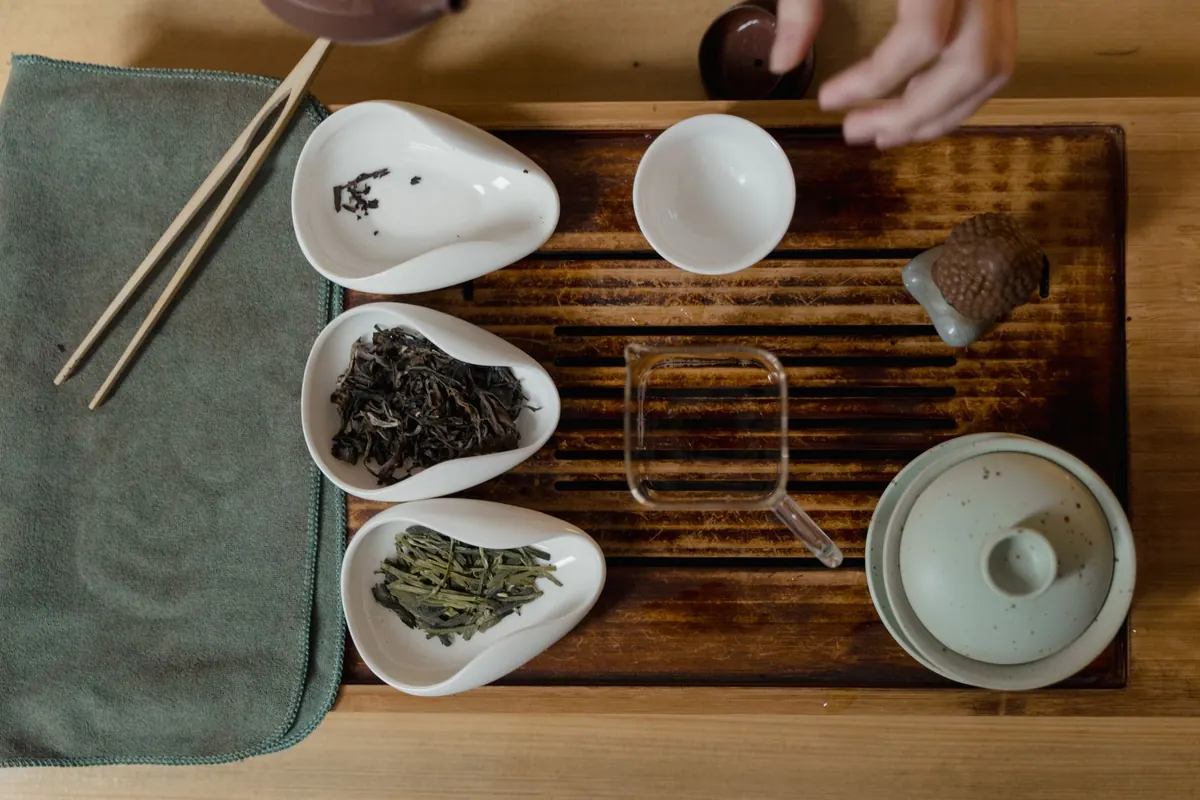
A gaiwan is three pieces: bowl, lid, saucer. Capacity usually runs from about 90 ml to 150 ml. You put leaf in the bowl, pour water over it, set the lid on, and pour the tea out through the gap between lid and rim. The lid works as a strainer, and later as a cup for smelling the wet leaf. There is no basket, no spout, and nothing to disassemble.
A Western teapot is built for volume — commonly 500 ml to a litre or more — with a spout, a lid, and either a built-in strainer at the base of the spout or a removable infuser basket. It is designed to make one long infusion and pour it for two or four people without anyone standing over it.
Both leave the leaf in contact with water. That single fact explains most of the differences that follow.
The Case for Starting With a Gaiwan
Control is the whole point. Because the bowl is small, you brew short — often 10 to 30 seconds for the first infusion — and then repeat. A tea that tastes flat at one minute becomes sweet at fifteen seconds, then floral on the third pour, then honeyed on the sixth. You feel that progression rather than reading about it.
A gaiwan is also remarkably cheap and remarkably versatile. Good porcelain costs less than a good teapot, and porcelain is neutral: it does not season, so you can brew an aged puerh in the morning and a delicate green in the afternoon without carrying flavours across. Cleanup is a rinse and a wipe.
The trade-offs are real. The bowl gets hot, and the pouring grip takes practice. Small pours mean refilling often. A stray leaf or two will escape into your cup. If four people want tea right now, a gaiwan is the wrong tool.
The grip, for what it is worth: thumb on the lid knob, fingers spread under the saucer or along the rim, and tilt — don't tip the whole thing upside down. If the walls are too hot to hold, hold the saucer.
The Case for Starting With a Western Teapot
Forgiveness. A teapot tolerates thirty extra seconds, a distracted phone call, a second cup poured from the same infusion. Broken-leaf black teas, blends, and most herbal infusions were practically designed for it, because they give up their flavour quickly and don't gain much from repeated short steeps.
It also scales. One pot serves a table. If you drink tea with family, or you like a mug beside your desk for twenty minutes, the teapot fits the way you actually drink.
The weakness is that the leaf keeps steeping. A litre of tea that goes bitter has no rescue. Between infusions you have no real control, so adjusting a tea to taste is a matter of guesswork rather than small experiments. Infuser baskets, meanwhile, collect tannins and leaf fragments and need a proper scrub.
One practical note before buying: test the pour. Some pots dribble down the spout regardless of technique, and a teapot that drips on the table every morning becomes a small daily irritation.
Match the Vessel to the Tea
- Whole-leaf oolongs — Dan Cong, Tieguanyin, roasted rock oolongs: gaiwan, for the repeated short steeps that reveal the aroma layers.
- Young sheng puerh and aged raw puerh — gaiwan for tasting, a small teapot for everyday drinking once you know what you like.
- Delicate greens and gyokuro — either, as long as it is small and you keep the water cool. A gaiwan makes temperature control easier.
- Broken-leaf Assam, English Breakfast, Ceylon — teapot. One infusion, milk if you like it, no fuss.
- Masala chai — teapot or a pan. Simmering milk and spices in a gaiwan is a mess waiting to happen.
- Herbals — rooibos, mint, chamomile — teapot. They need one long steep, not precision.
- Tea for a crowd, or tea you'll sip while working — teapot, or a gaiwan brewed "grandpa style" with the leaf left in the bowl.
Beginner Mistakes Worth Avoiding
With a gaiwan
Filling water to the brim is the most common error; it guarantees burnt fingers. Leave the water line below the rim. Steeping for three minutes as you would in a pot will give you something harsh — start short and add five to ten seconds per infusion. And don't treat every tea as a boiling-water tea; greens often prefer 70–80°C.
With a teapot
Overleafing is the mirror-image mistake. A rough starting point is one heaped teaspoon of leaf per cup, then adjust. Rinse the pot with hot water before brewing so the first pour isn't cooled by cold ceramic. And if you're brewing for one, fill the pot halfway rather than making tea you'll pour away.
Whichever vessel you choose, a small kitchen scale and a thermometer will improve your tea more than an upgrade to a prettier pot.
A Practical Way to Choose
If you mostly drink alone, lean toward whole-leaf teas, and want to taste how a tea changes from pour to pour, start with a porcelain gaiwan around 100–120 ml. Add a small pitcher or just pour into a mug.
If you brew for two or more, drink black blends and herbals, or want tea you can set down and return to, start with a teapot of 500–600 ml and a removable basket with fine holes. Learn to lift the basket out when the tea is ready and much of the pot's weakness disappears.
Owning both eventually is normal, not extravagant. A small teapot teaches restraint; a gaiwan teaches attention. Either one, used deliberately for a few weeks, will make you a better brewer in the other.
Photo: Tima Miroshnichenko / Pexels